The Nitrogen Cycle
Meta Description
Understand the nitrogen cycle in simple language with clear steps and examples. Ideal for IGCSE/ Cambridge Biology students and exam revision.
Why Nitrogen Matters in Living Things
Nitrogen is one of the most important elements for life. It helps build proteins, enzymes, and DNA, which every living organism needs to grow and function.
Even though about 78% of the air is nitrogen gas, most plants and animals cannot use it in this form. That’s where the nitrogen cycle comes in.
The nitrogen cycle is nature’s way of recycling nitrogen so that it can move from the air into the soil, into plants and animals, and back again.
What Is the Nitrogen Cycle?
The nitrogen cycle is the continuous process that changes nitrogen into different forms and moves it through the environment.
It connects:
The atmosphere
Soil
Plants
Animals
Microorganisms
Without this cycle, plants wouldn’t get the nutrients they need, and food chains would break down.
Simple Diagram of the Nitrogen Cycle
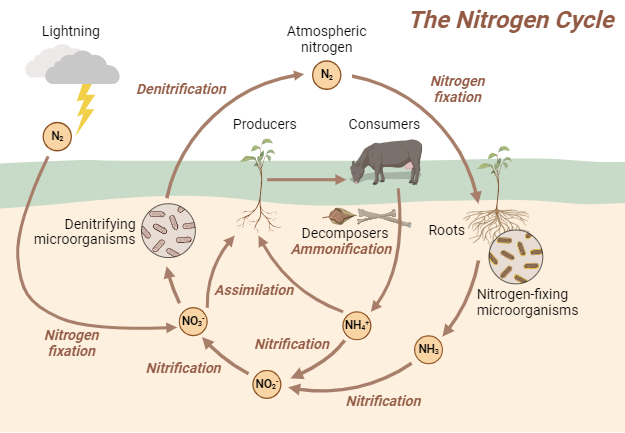
The Main Steps of the Nitrogen Cycle
1. Nitrogen Fixation – Making Nitrogen Usable
Nitrogen gas from the air cannot be used directly by plants. It first needs to be changed into ammonia or similar compounds.

This happens through:
Special bacteria in the soil
Bacteria living in the roots of legumes like beans and peas
Lightning
Artificial fertilizers made by humans
This step is called nitrogen fixation because nitrogen is “fixed” into a usable form.
2. Ammonification – Recycling Nitrogen from Dead Matter
When plants and animals die or produce waste, decomposers such as bacteria and fungi break down their proteins and DNA.
During this process, nitrogen compounds are converted into ammonia, which is released into the soil.

In simple terms:
Dead organisms → decomposers → ammonia in soil
This ammonia can then be used in the next stage of the cycle.
3. Nitrification – Turning Ammonia into Nitrates
Next, other soil bacteria convert ammonia into nitrites and then into nitrates.
Nitrates are important because they are the form of nitrogen that plants can easily absorb through their roots.

4. Assimilation – Plants Use the Nitrogen
Once plants absorb nitrates, they use them to make:
Proteins
Amino acids
DNA


Animals then get nitrogen by eating plants or other animals.This is how nitrogen enters food chains.
5. Decomposition – Returning Nitrogen to the Soil
When plants and animals die, decomposers like bacteria and fungi break down their bodies.
This process releases ammonia back into the soil.
It’s nature’s recycling system.

Cambridge keyword: Decomposers return nutrients to the soil.
6. Denitrification – Completing the Cycle
Finally, some bacteria convert nitrates back into nitrogen gas.
This gas returns to the atmosphere, and the cycle starts again.

Exam phrase: Denitrifying bacteria reduce soil nitrates.

Why the Nitrogen Cycle Is So Important
The nitrogen cycle keeps ecosystems healthy because it:
-
Provides nutrients for plant growth
-
Maintains soil fertility
-
Supports food chains
-
Recycles nutrients naturally
-
Keeps the environment balanced
Without this cycle, plants wouldn’t grow and life on Earth would struggle to survive.
Real-Life Connections Students Should Know
You can actually see the nitrogen cycle happening in everyday life:
Farmers grow legumes to improve soil nitrogen
Fertilizers add nitrates to soil
Composting returns nitrogen to the ground
Lightning naturally helps fix nitrogen
This shows how the nitrogen cycle isn’t just theory — it affects agriculture and food production directly.
SIMPLE Way to Remember the Nitrogen Cycle
Think of the order:
Fixation → Ammonification → Nitrification → Assimilation → Denitrification
Or remember:
“Farmers Add Natural Ammonia Daily.”
Quick Cambridge-Style Questions
Why can’t plants use nitrogen gas directly?
Because nitrogen gas is very stable and must be converted into nitrates first.
What happens during ammonification?
Decomposers convert nitrogen compounds in dead organisms into ammonia.
Which form of nitrogen do plants absorb?
Nitrates.
What do decomposers do in the nitrogen cycle?
They break down dead organisms and release ammonia.
What happens during denitrification?
Bacteria convert nitrates into nitrogen gas.

Final Thoughts
The nitrogen cycle may sound complicated at first, but it’s really just nature’s recycling system. It ensures that nitrogen keeps moving through the environment so living things can grow and survive.
For Cambridge Biology students, understanding this cycle helps explain plant nutrition, ecosystems, agriculture, and food chains — making it one of the most important topics to revise.


Comments
Post a Comment